PRAMKICKER | MO Theatre
Images: Morgan Roberts
PRAMKICKER was a triggering, tender, and thought-provoking toast to the insanely wild jungle that womanhood is.
Of all the things that can be struck, an empty pram receiving the forceful kicks of a woman who has momentarily lost her temper is grounds for moral policing, character dissection — or worse, character assassination.
What is it that a "precious" pram promises?
A future? Innocence? Hope? Continuity?
Or perhaps something far more dangerous: a socially sanctioned and openly venerated version of womanhood.
It is the holder of the fragility of human life, and in it lies the potential of a lifetime of possibilities.
The pram, therefore, is akin to a womb, for they are both vessels projecting a—drum roll please—socially sanctioned and openly venerated version of womanhood.
Repetition much? How tiresome indeed to perform as a woman in a world that will never offer her any rest to just be, however she chooses to do so. She is to be trained, questioned, rejected, swallowed whole when sweet and spat out when unsavoury.
A pramkicker, especially a female one, must then be a heartless, soulless creature who is a traitor to the cause of humankind and must therefore be a raging lunatic.
Or so we are taught.
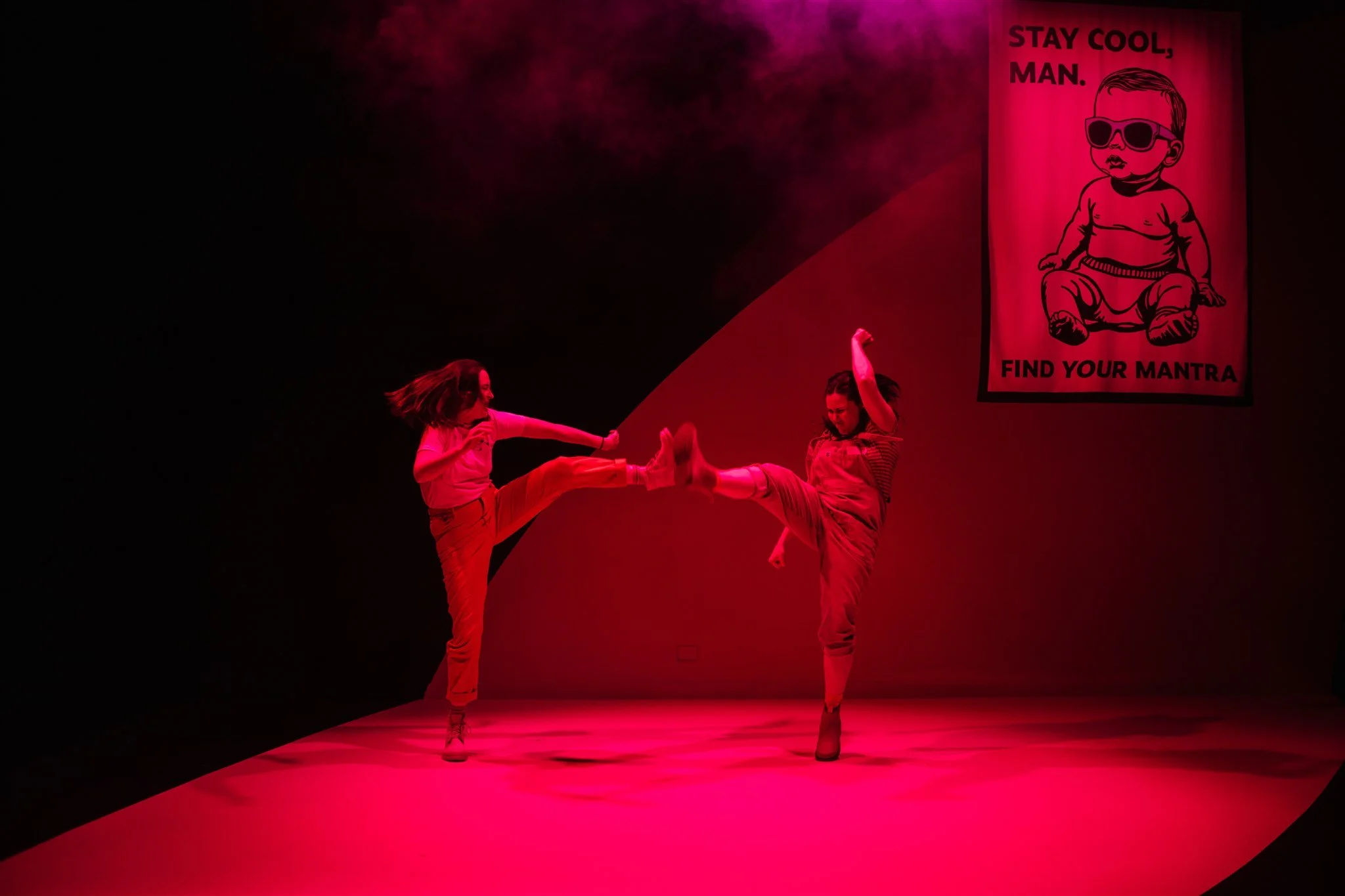
PRAMKICKER kicked society's hard-scripted conventions for women out the door, delivering a solid punch to a garden variety of patriarchies while interrogating the worthiness of wombs with riotous humour and righteous anger.
PRAMKICKER was profanities galore, a flippin' laughfest, a triumphant tragicomedy!
Images: Morgan Roberts
It was a Thursday night. Still a school holiday, and I was parenting my daughter dutifully, painstakingly patiently, until my husband got home to take over. That was the only way I could go catch this.
I had an iced coffee earlier in the afternoon and had not stopped buzzing from caffeine-induced jitteriness. My friend and I made it to the theatre and were greeted by curated chaos—overturned prams, announcement boards featuring activities such as yoga classes for mums to lose weight, music lessons for children, a whole smorgasbord of how the parentals can develop the potential of their prodigious progeny.
My sense of sarcasm is activated.
We walk into the hungry belly of Cremorne Theatre at QPAC and there is no suspension of disbelief. I must confess I had only read something about the play weeks ago, but had no real idea what it was about, except that it was on motherhood or something like that—hey, right up my alley.
I signed up to review it, certain that I was going to be critical of this Aussie version of motherhood—wine mums, drivers of 4x4s, pushers for push presents, and whatnot. Refreshingly, those tropes did not take centre stage.
I am a first-generation immigrant mum who has learnt to navigate healthcare and motherhood without support systems. I have found myself instinctively gravitating towards other immigrant mums at birthday parties because we know we struggle differently, even though we all struggle.
On some level, I was ready not to like this play. I thought I was there to observe, but I saw multiple fragmented versions of myself in the angst, anxieties, and grievances of the lead characters.
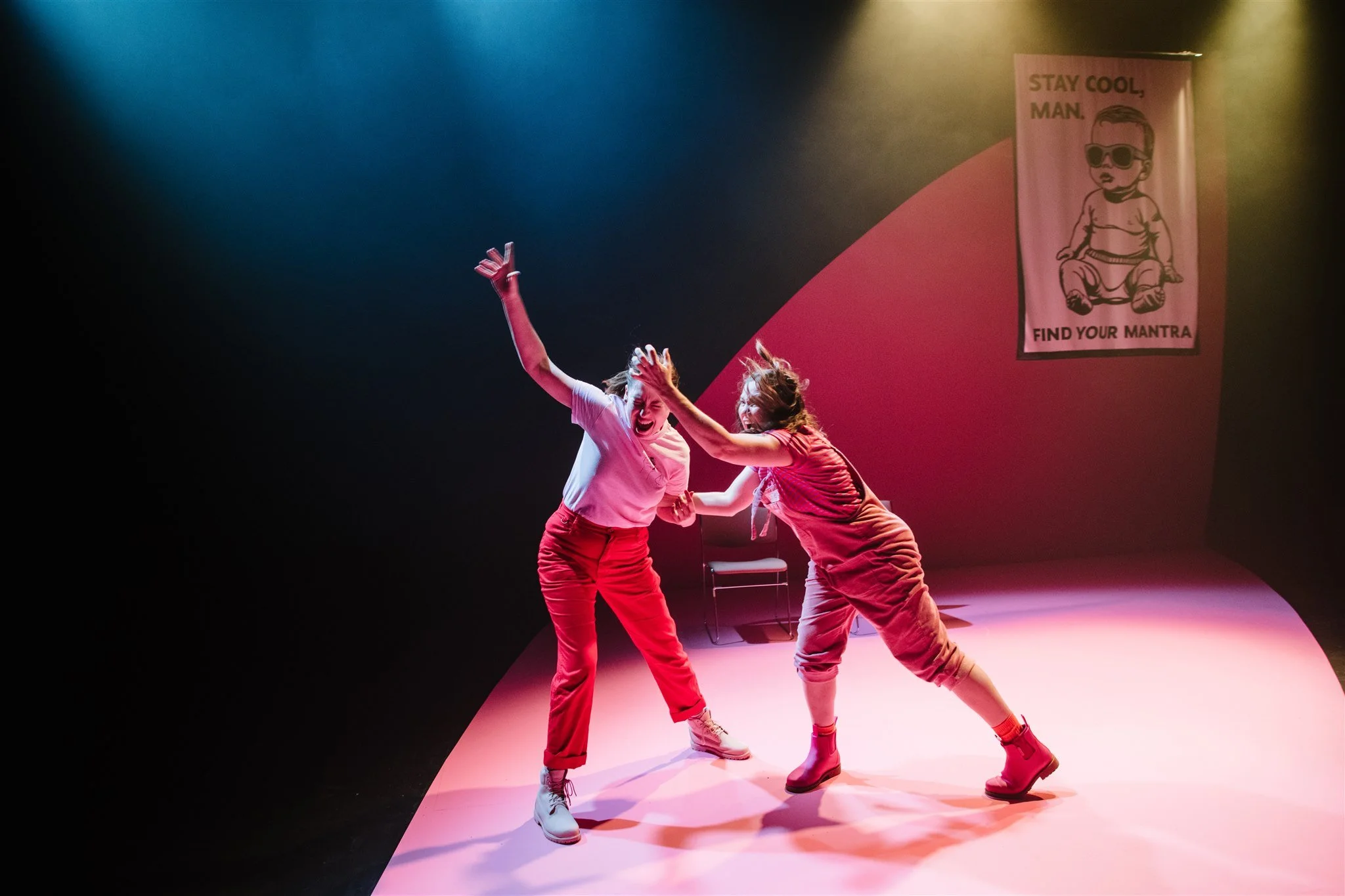
Centred primarily on the relationship between two women—Jude the pramkicker and Susie, the pramkicker's sister—Sadie Hassler's ode to women whose choices about becoming birthing bodies are rarely privileged is thrust under a theatrical microscope for more than our mindless consumption. The action-packed banter and in-your-face wham bam pow wow choreography move at breakneck speed, delivering a series of truth bombs, blow after blow.
Images: Morgan Roberts
Sarah Ann McLeod and Sarah Ogden were sensational in assuming a multiplicity of personas with such distinction. The fluidity of those changeovers was so smooth and masterful that I fangirled silently in awe at the edge of my seat.
Directors Amy Ingram and Nerida Matthaei nailed the pacing of the play. The embodied sequences of movement, coupled with dialogue, carried volatile emotional landscapes that were not easy to confront, yet the forward propulsion and momentum did not allow me to linger on them as they unravelled before us.
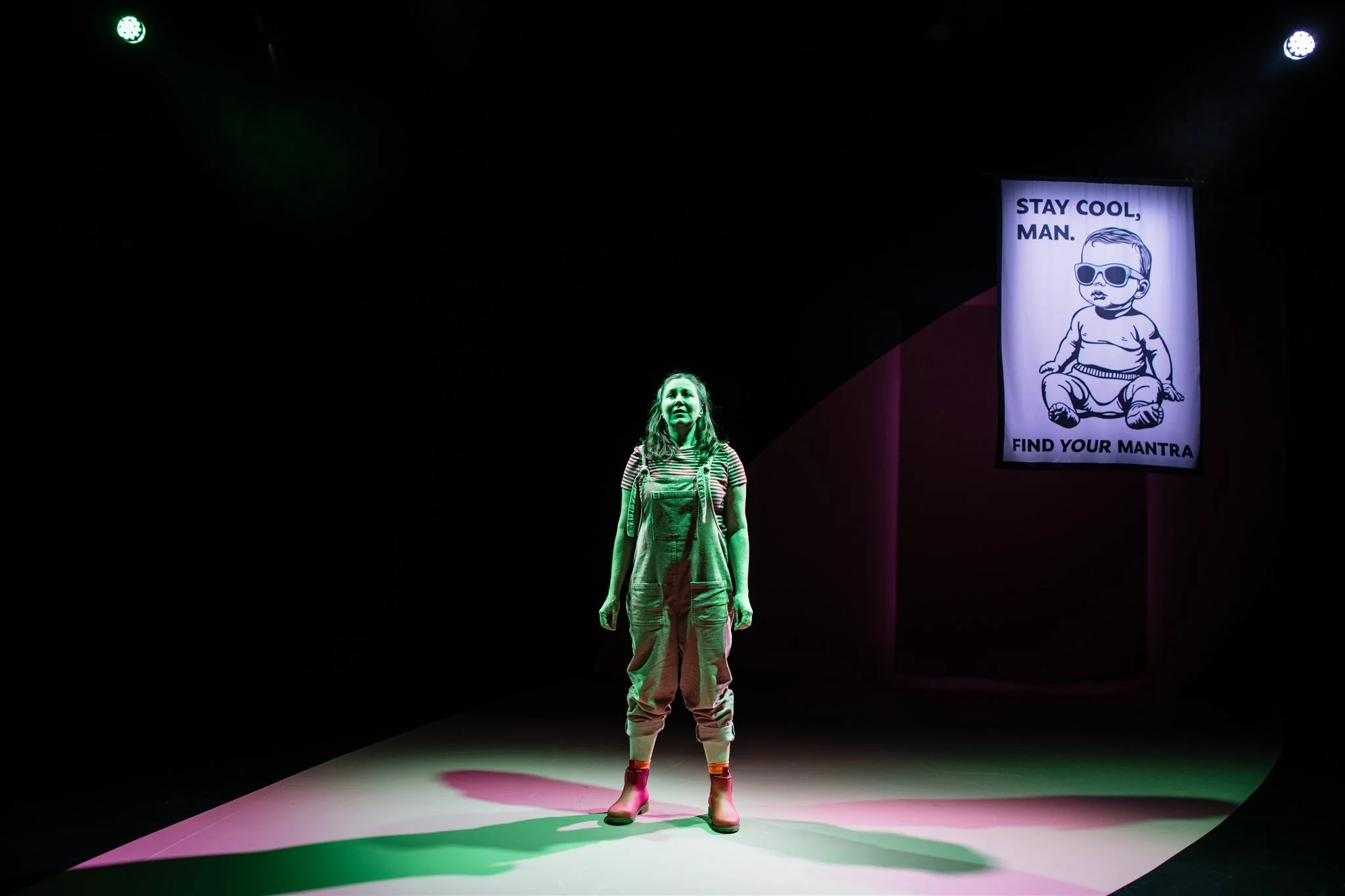
I love that Sadie Hassler's work has deliberately and literally spotlighted—the green spotlight serving as the moment for confessional storytelling by the characters—the voices of the women on the other side. It highlights the ones who have to constantly prove or convince others that they are child-free by choice, and the ones who, for a range of reasons, cannot yet bear the cost of crossing the line into motherhood—a terrain you cannot will into non-existence, for it is the point of no return.
The point is made loud.
The point is as relevant as breathing: women, whether they are mothers or not, are immeasurably enough as they are.
The point is grief is inevitable, no matter how much autonomy we assume over our decisions.
There were standout scenes. I felt them wholly. There was sheer brilliance in those moments. Messy women can make magic. They roll with the punches. They fall apart, pick themselves up, and somehow keep showing up for themselves and their people.
If anything, PRAMKICKER is a testimony to this indefatigable spirit of theirs. Even at their worst, supposedly ugliest, and emptiest, kindness and the promise of better days prevail in horizons they dare to imagine and sisterly friendships. PRAMKICKER is an exposé. Newsflash: we are all navigating life in real time with no manual—and that is more than okay.
The PRAMKICKER here is not an abstract being. It is rage seeking compassion, asking not to be punished nor tolerated, but simply allowed to pause, pulsate, and be seen without judgement.
We have pramkickers inside all of us, ticking away on tenterhooks.
PRAMKICKER played at QPAC’s Cremorne Theatre from 1-4 July 2026.
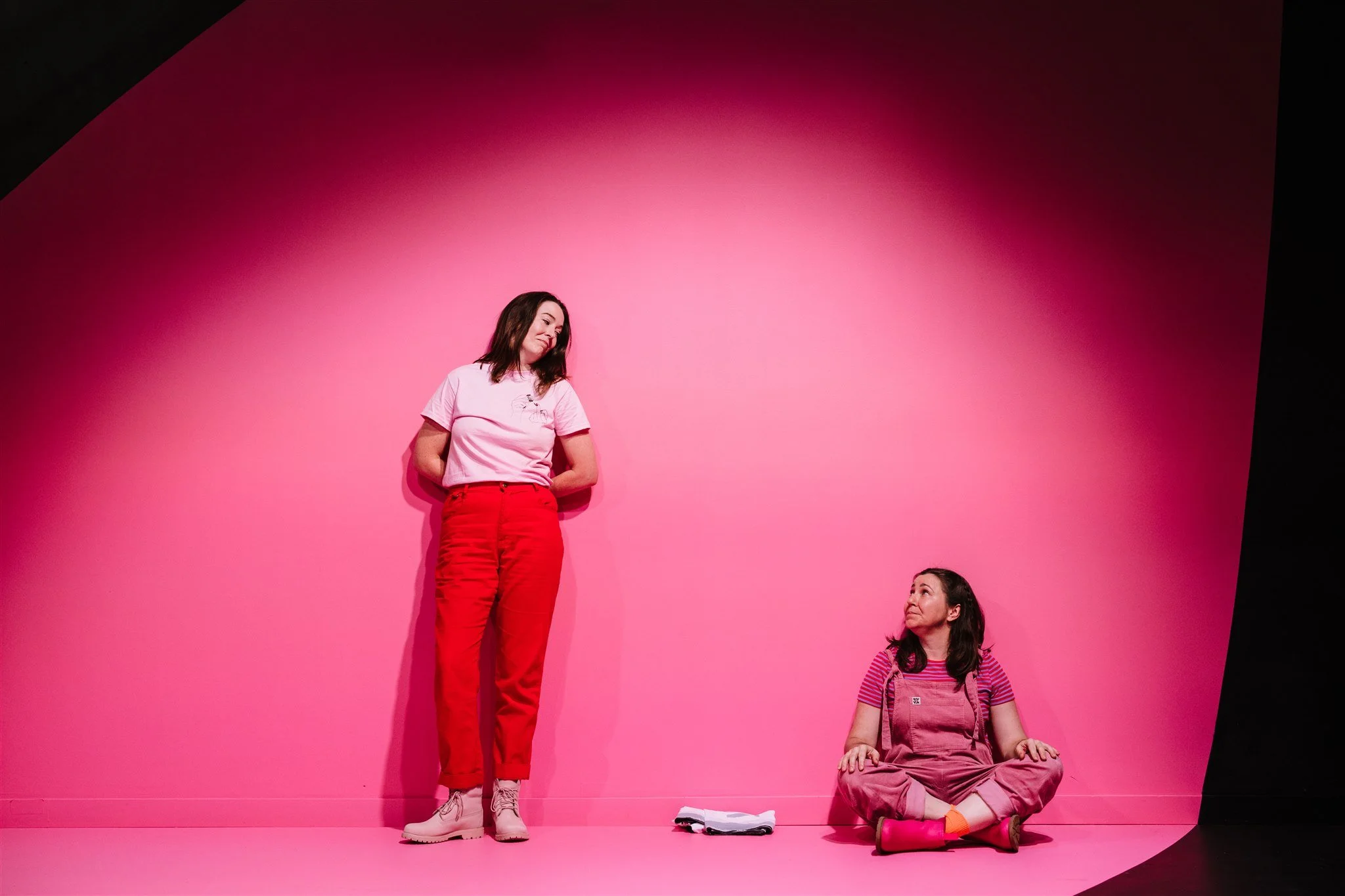
Image: Morgan Roberts