Fireface | The Velvet Collective
Images: Oversimplified Complications
Written by German playwright Marius von Mayenburg in 1997 and translated by Maja Zade, the Velvet Collective’s premiere of Fireface at PIP Theatre in Milton is a bold and provocative theatre experience. The story follows the lives of two siblings—Olga and Kurt—as they push against the stifling constraints of their parents' household, spiralling into a chaotic web of rebellion. Sitting in the theatre on a cool Brisbane winter night, I was instantly pulled into the production’s stark, intimate world. The play demanded my attention from the outset, pulling me into a domestic space that was as visibly decaying as it was volatile, inviting me to witness the unsettling disintegration of the family drama at its core.
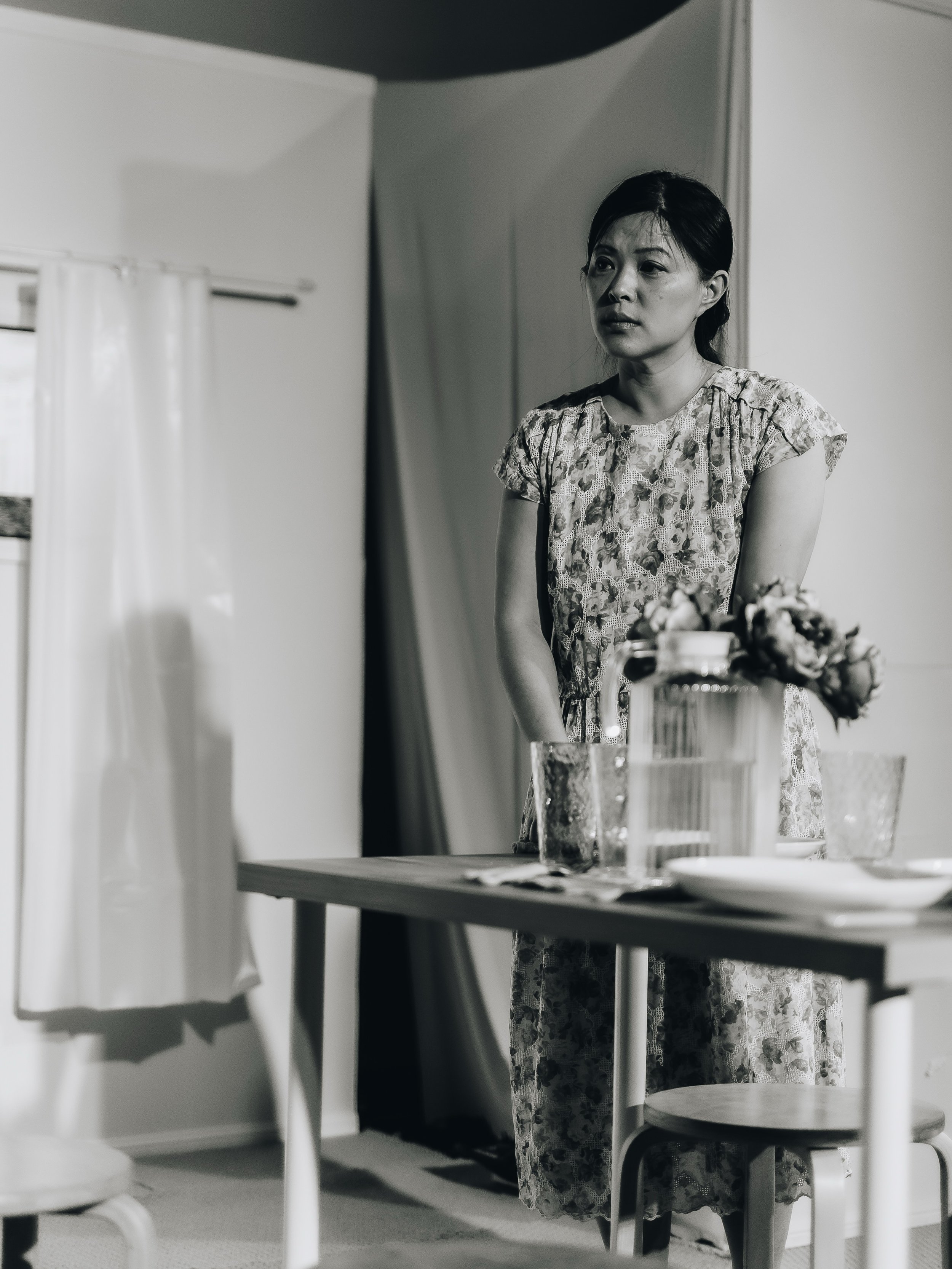
Harrison Thorne’s set design was a triumph of clever space management— think modular IKEA-style functionality and clearly defined zones that somehow made a living room, bedroom, bathroom, and even an “outside” fit into that tiny footprint. It was a white-walled box that managed to pack a full house into a limited space. The set utilised doors to great success, allowing for seamless scenes transitions as characters move between rooms. Against these stark walls, the dining table and bed felt grounded and real. A particular unique creative feature was the inclusion of an old-style TV, which acted as a distorted visual extension of the stage, reflecting the action in black and white or adding effects like smoke that the physical stage could not replicate. It really felt like I was sitting in the middle of the mess with them in that claustrophobic space.
The rest of the technical choices really drove the chaos. The show lighting kicked off in a dark room with a burst of flashing light that acted as a warning shot— it basically screamed, ‘this is going to be intense’, and told you exactly what kind of ride you were in for, which highlighted the nature of the story. Throughout the rest of the production, the lighting shifted from clinical white light to isolating single spotlights when a character was mid-monologue, effectively shrinking the world down to hear their internal thoughts. The sound design was just as calculated, popping up occasionally to thicken the atmosphere at all the right moments.
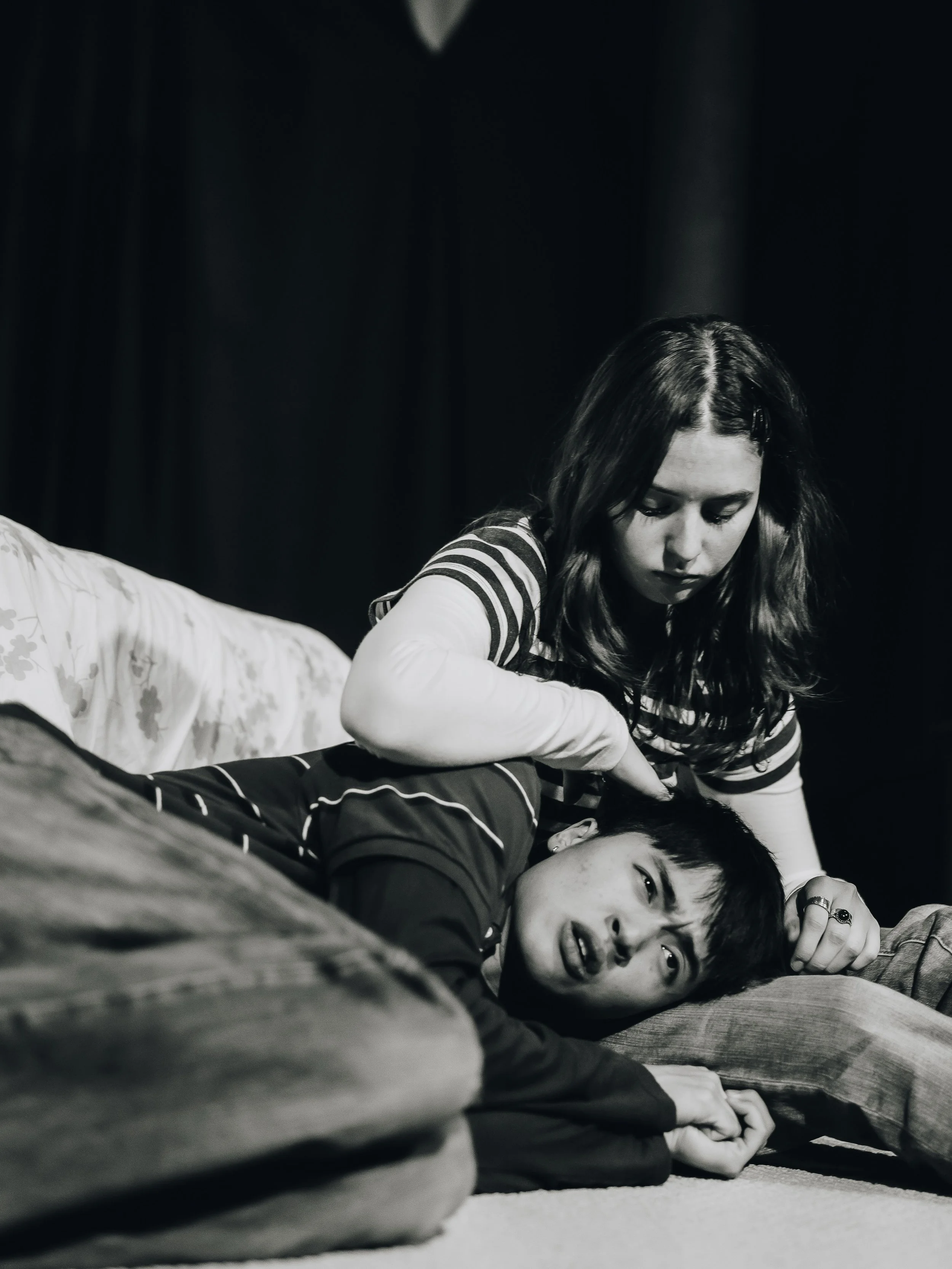
Beyond the stagecraft, the play explored some genuinely unsettling themes. At its heart, it was a raw look at the intense, often inappropriate closeness between siblings who were desperate to escape their parents’ world and their own skin. It was packed with teenage rebellion, jealousy, arson, and violence. By interrogating these messy, warped family dynamics, the show forced audiences to examine how a ‘perfect’ nuclear family can be a breeding ground for rot. It even felt surprisingly relevant here—it was not just a show about a dysfunctional family; it was a prompt to think about how we respond to youth violence. Are we willing to look at the underlying conditions that lead to these breakdowns in the first place?
Fireface was a confronting watch— there’s no denying that— the performance was captivating; honestly, I was half-convinced that the high stakes on stage in the end would bleed into reality in the room, to the point where I momentarily forgot I was in a controlled environment. But it is the kind of theatre that sparks discussions after the lights come up. And yet, for all the challenging subject matter, the production was masterfully handled with a balanced touch; you are gripped by the drama rather than feeling like you need to look away.
Fireface played at PIP Theatre, Milton from 24-27 June 2026.
Images: Oversimplified Complications