Homegrown | Loose Tooth Theatre
Images: Sarah Esser
From Bride of Frankenstein to Lisa Frankenstein, horror has an inextricable relationship with queerness - it’s a genre that is disproportionately enjoyed and made by queer people, and has a long (occasionally sordid) history within the community. With Homegrown, writer Sarah Esser has created a worthy addition to this canon which uses the queerness of its central characters to explore universal themes in a way that left me feeling genuinely affected.
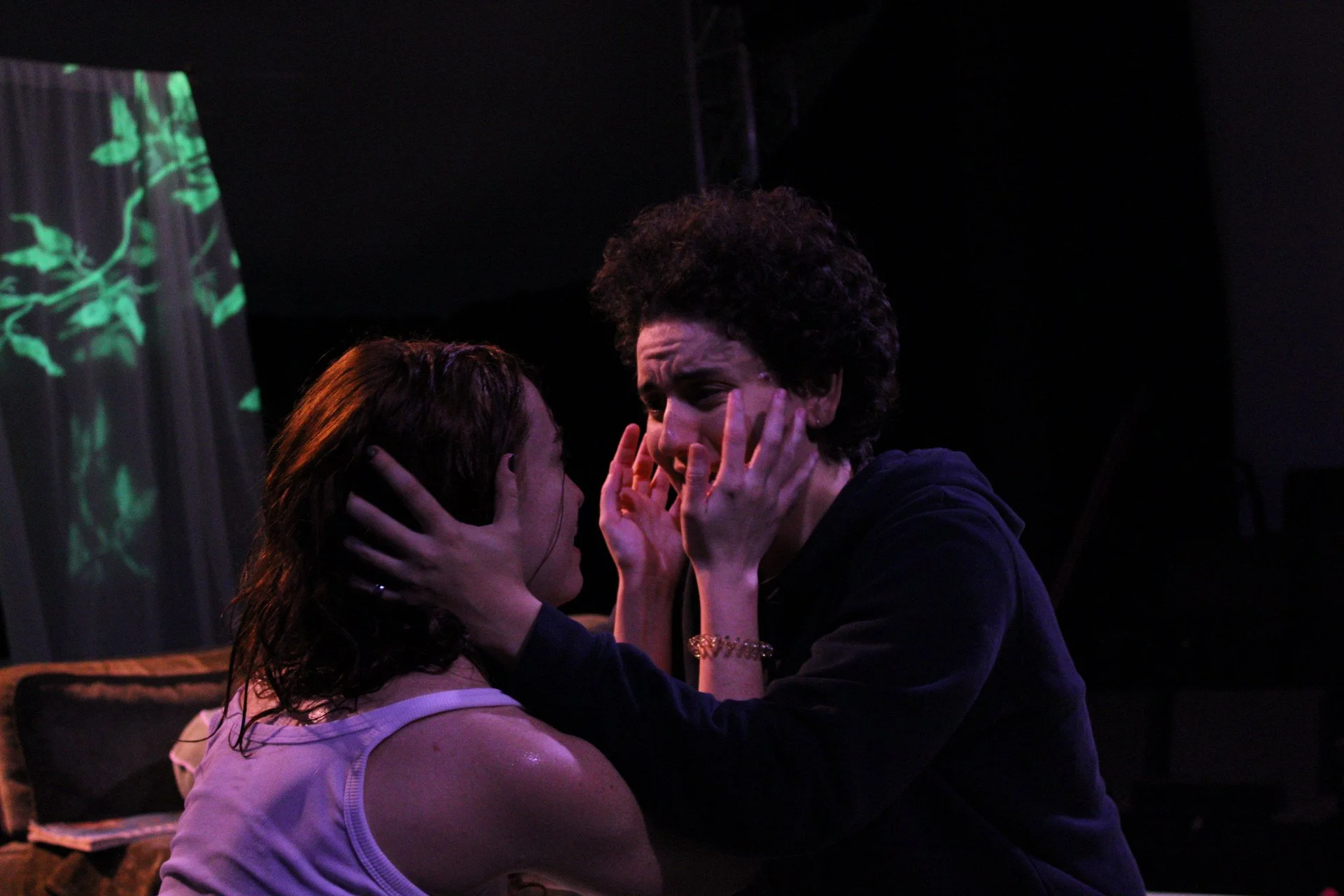
Homegrown follows lesbian couple and gardening magazine co-owners Sophie and Tash as, after failing to conceive via IVF for the eighth time, they discover a strange plant growing from their floorboards. Pragmatist Tash wants to move on with their lives as exciting career opportunities present themselves, but idealistic Sophie cannot let go, beginning to obsess over categorising this new discovery. It’s a deceptively simple premise that lends itself to the stage - Homegrown takes place entirely in Sophie and Tash’s home and, as tensions fester, you can feel the couple grow further apart as each lets their obsessions get the better of them.
A brief line of Sophie’s early in the play explains how, despite often being categorised as male or female, plants are much more complex than a human binary can allow for. This to me seemed like the Rosetta Stone of the play - Homegrown is all about the complexities of human experience that cannot be explained away or conveniently categorised. Sophie recognises that pregnancy is likely not possible for her, and that the plant is beyond her understanding, but is simply too enamoured by both ideas to let either go. Tash recognises that the conservative religion within which she was raised is damaging her as well as negatively affecting Sophie, but returns to her rosaries for comfort when times turn tough. Both parties cannot part with fundamental aspects of their personhood, and this complexity is what drives the tragic events of the play as it progresses.
Images: Sarah Esser
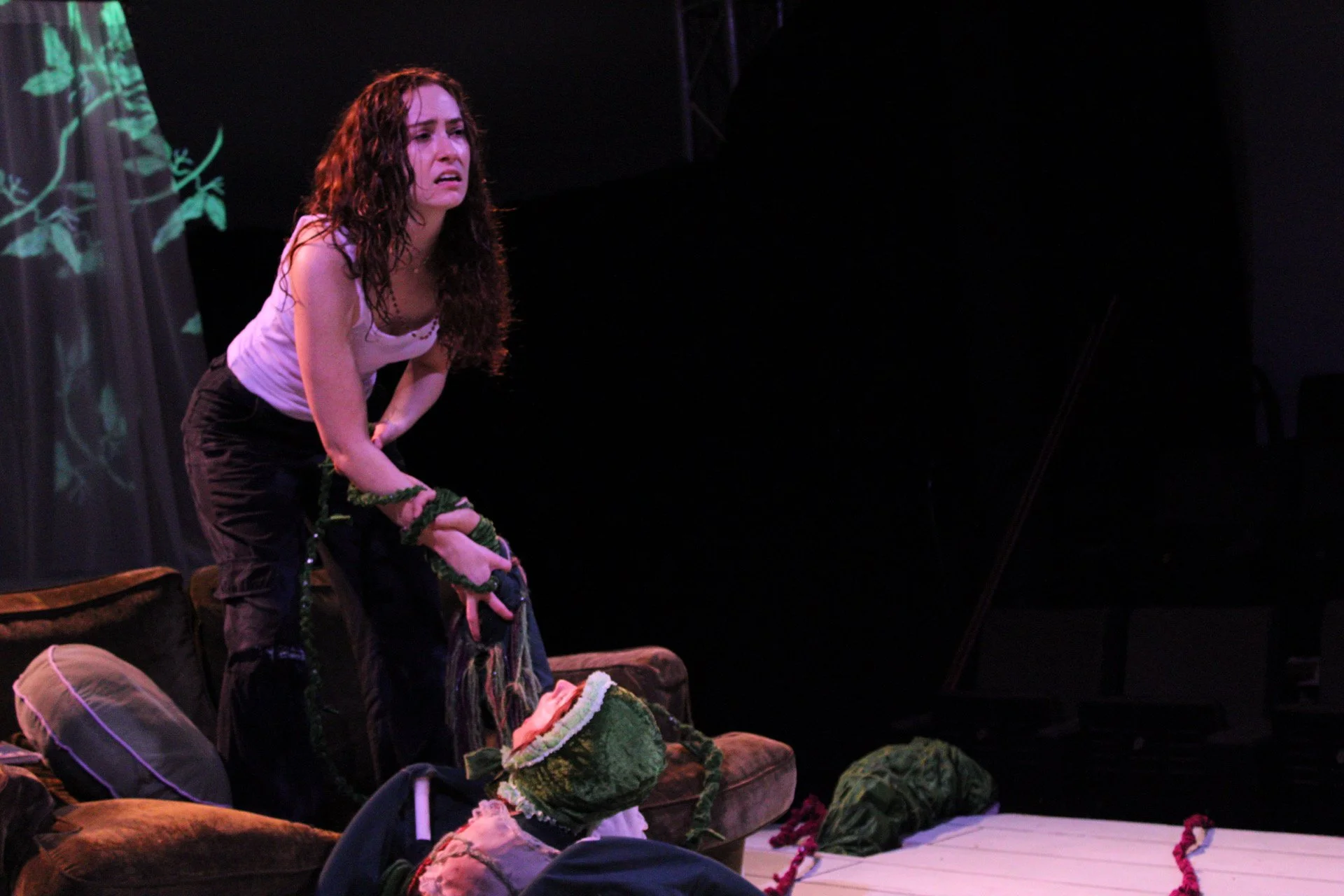
Writer Sarah Esser has achieved what I had previously thought was impossible - a horror play that is genuinely uncomfortable and upsetting. While many stage additions to the genre sit within psychological or gothic spaces (due to obvious difficulties showing a Scary Monster in a black box theatre), Esser leans deeply into the 70’s-80’s filmic space of puppetry oriented body horror and religious trauma (à la The Fly or The Exorcist) in a way that shines on PIP’s sleek indie stage. Sequences in which the plant creeps closer to our main characters filled me with dread, while a certain scene featuring a possum made me genuinely throw up in my mouth. Homegrown is horror that thrives off of the festering nature of words unsaid, using character drama as a vehicle to examine and exploit myriad fears and neuroticisms. This being said, I felt that Homegrown sometimes wore its influences a little too on its sleeve. Verbal references to Little Shop of Horrors, alongside a very Alan Menken-style score, felt unnecessary to me - I already know that your show about a carnivorous plant puppet was influenced by Little Shop, why do you need to tell me directly? None of this detracted from my experience, but I feel that future stagings may benefit from more referential restraint.
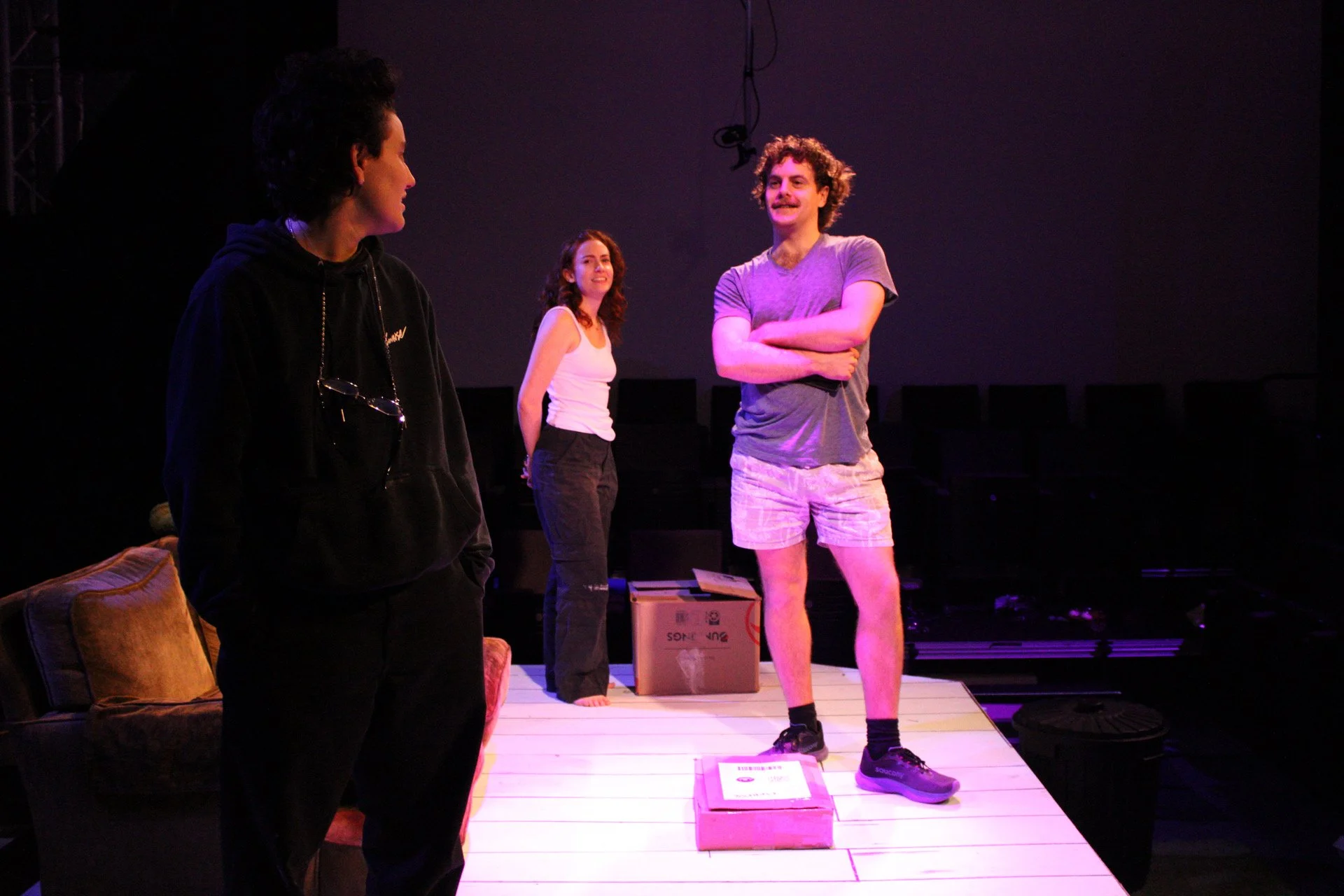
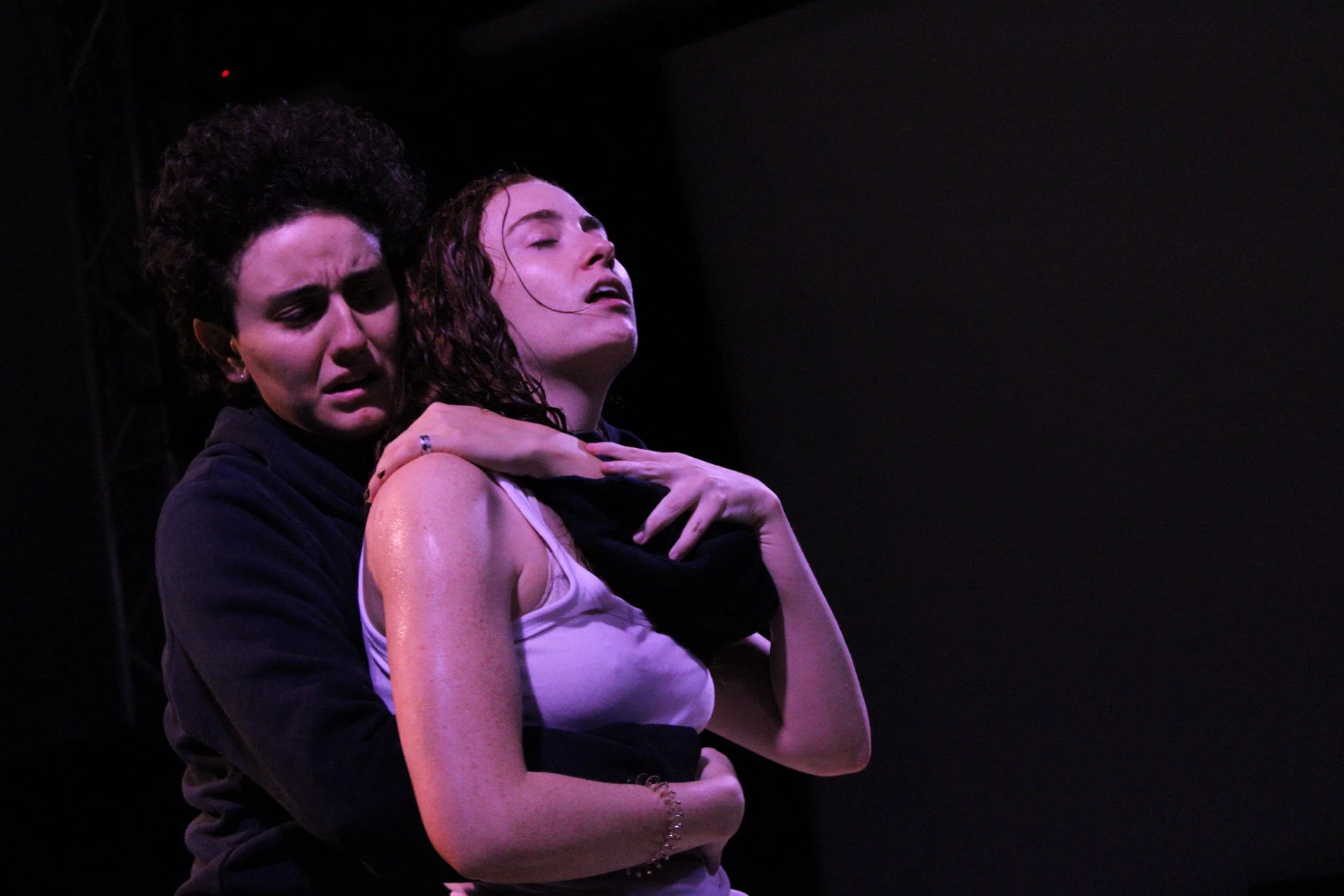
For all its narrative quality and deft staging, Homegrown would not be nearly as good without its powerhouse performances. Billy Fogarty and Geena Schwartz’s performances as Sophie and Tash respectively are phenomenal, and their portrayal of each character and their interpersonal dynamics are the heart of the show. I was blown away by Schwartz’s turn as Tash - a successful career woman torn between latent religious guilt and the love of her life, Tash is the heart of the show. Her positioning as the ‘smaller’ personality shifts throughout the runtime, with Schwartz slowly transitioning into a sweaty, panicked performance that felt genuinely upsetting to watch. I might be off base, but to me her performance felt influenced by the Evil Dead films, with each line holding a camp terror that oscillates between horrifying and hilarious depending on the moment. I was particularly struck by her ability to switch between entranced and horrified in an instant, giving the descent into surreal mania an emotional core. In contrast, Fogarty’s Sophie acts as the (proverbial) straight man - while by no means uninteresting on a character level, she retains a much more grounded energy throughout the show, allowing Schwartz’s heightened performance to really shine. Sophie’s struggles with being the more obviously queer partner, the difficulties of two years of IVF, and the need to retain a sense of self felt genuine and relatable, with Fogarty’s combination of charm and bitterness creating a complex, real lens through which these struggles were explored. Her obsession with ‘solving’ the mystery of the plant while mourning the concurrent failures of eight rounds of IVF is deftly played by Fogarty, who lends the character a sense of emotional realism that makes her hard to hate even when doing what would conventionally be considered ‘the wrong thing’. Both performers play off each other in a way that makes their chemistry and conflict feel painfully real, lending a tragic heart to the horrifying events that play out. Additionally, Oscar Thelander’s brief role as their charmingly oblivious postman adds some excellent levity to the piece, with his position as a gradually increasing wedge between the two’s intimacy being delightfully offset by his pornographic deliveries of phrases like ‘packages’ and ‘heavy loads’.
Images: Sarah Esser
As I noted when reviewing The Natural Horse and Horse Play, it seems our local theatremakers are carving a niche for themselves within the puppetry space, and this is true with Homegrown as well. Indiah Morris’ turn as Willow the Plant is equal parts funny and frightening, with her insidious hypnotism being offset by a naive, childlike quality that makes her hard not to root for (ha ha) in some sense. The sensitivity with which she draws in Sophie and Tash before violently lashing out feels almost vampiric, while maintaining a playful tone that prevents Sophie’s refusal to kill the plant from feeling forced. As her strength grows, so too does her stage presence - beginning the show underneath the floorboards and ending it fully exposed, Morris makes use of the entire stage to a degree that most actors couldn’t even conceive of. This being said, much of the puppetry action takes place on or under the floor of the stage, with vines writhing, bodies crawling, and heads popping up to smile mischievously. While the in-the-round staging meant that most audiences would have no issues, my position led to me having to crane my head any time Morris was onstage to try and catch a glimpse of what was happening. This may have just been my experience, but I believe future stagings would benefit from considering the lowest common denominator in regards to the percentage of stage which audience members can see.
If it wasn’t already obvious, I loved Homegrown. It’s an absolute standout show which makes me feel even more confident than I already was in the state of our local theatre scene. What Esser has achieved alongside co-directors Annabel Gilbert and Grace Longwill should be commended, and I cannot wait to see what Loose Tooth Theatre go on to create.
Homegrown by Loose Tooth Theatre played at PIP Theatre from 16-20 June 2026.
Images: Sarah Esser