Werewolf | Binge Culture
Images: Lewis Ferris
From the very outset of Werewolf, I was enthralled. Receiving a series of audience guidelines in the foyer? Thrilling. An unconventional on-stage entry through a quasi-containment-chamber plastic screen? Absolutely on board. Being greeted by armbanded ‘Wardens’ who look like the outdoorsy camp counsellors of my teenage crush dreams? Strapped in. And all of that was before I'd even read my seat allotted instructional card…gasp! (if you know, you know). Like an excited five-year-old promised a Kinder Surprise after a grocery shop, I couldn’t hold back this fizzing anticipation for what was to come. What I’m saying is that Binge Culture get audiences, and Werewolf is proof.
The premise: a lycanthropy outbreak has begun (obviously), and we’re issued a government mandate to head to our local shelter, where we and our makeshift community of Bris Fest audiences will isolate for six nights and seven days. Drawing inspiration from the social deduction game of the same name, Binge Culture have created a participatory comedy-thriller nightmare that stands as one of my favourite theatre experiences ever.
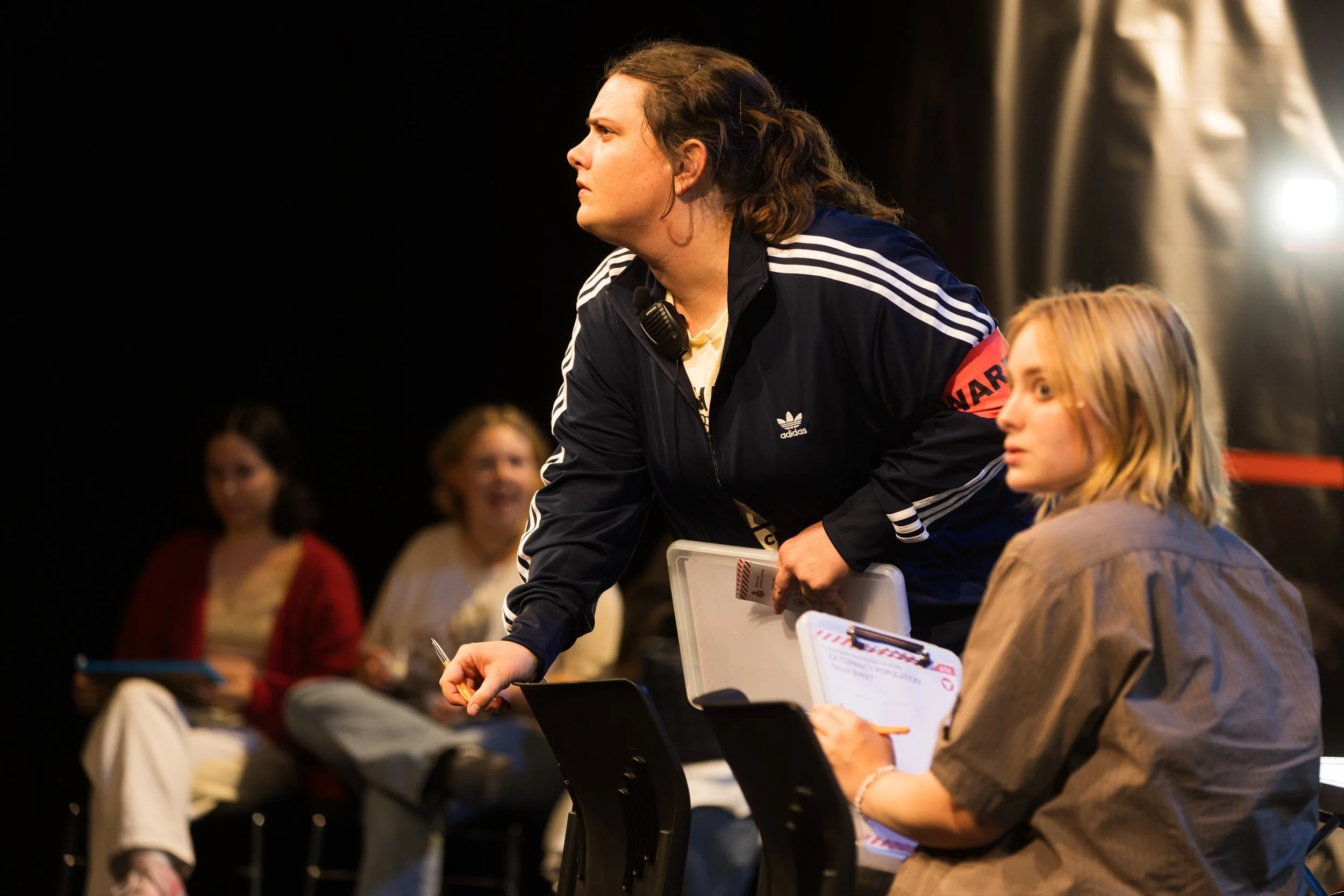
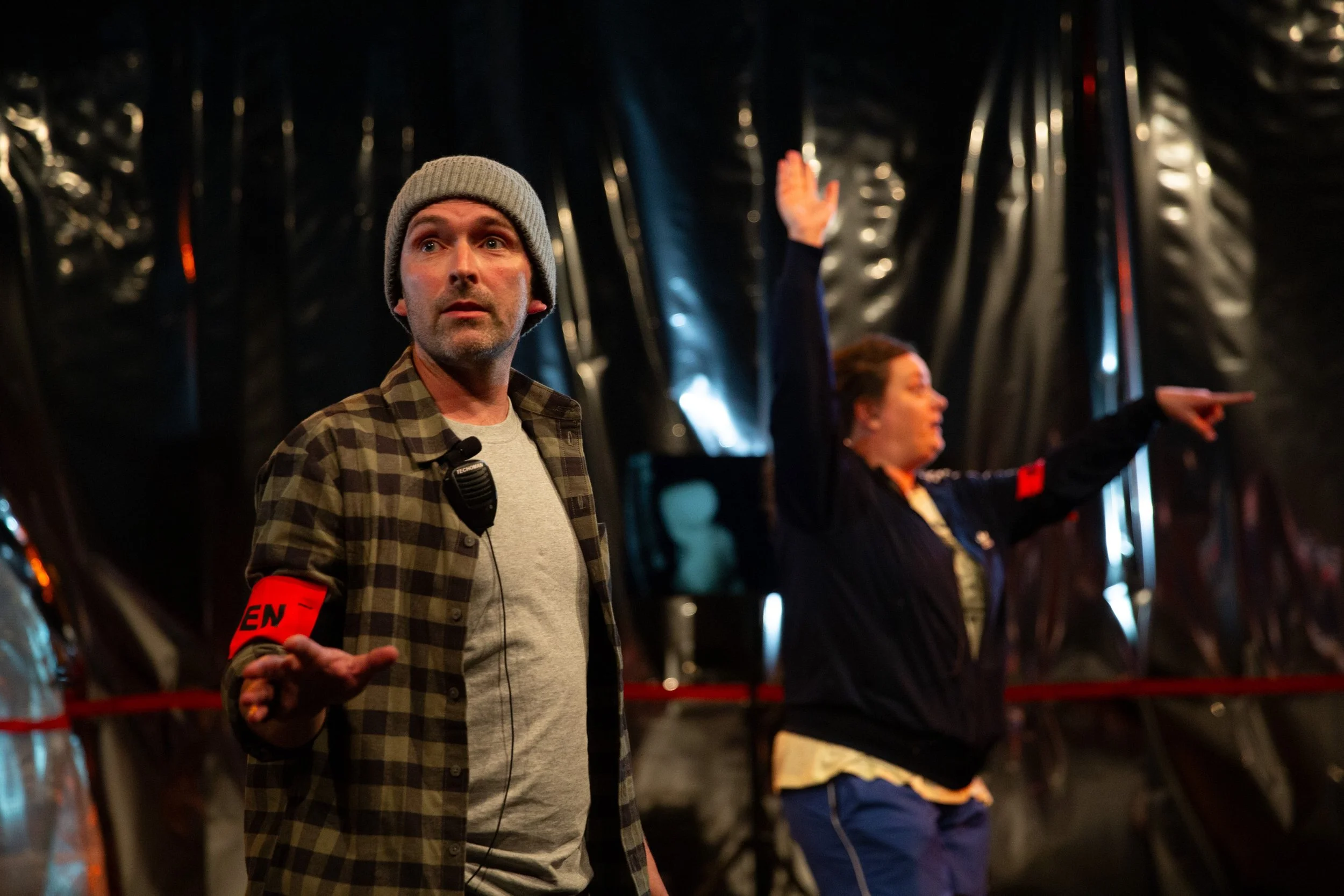
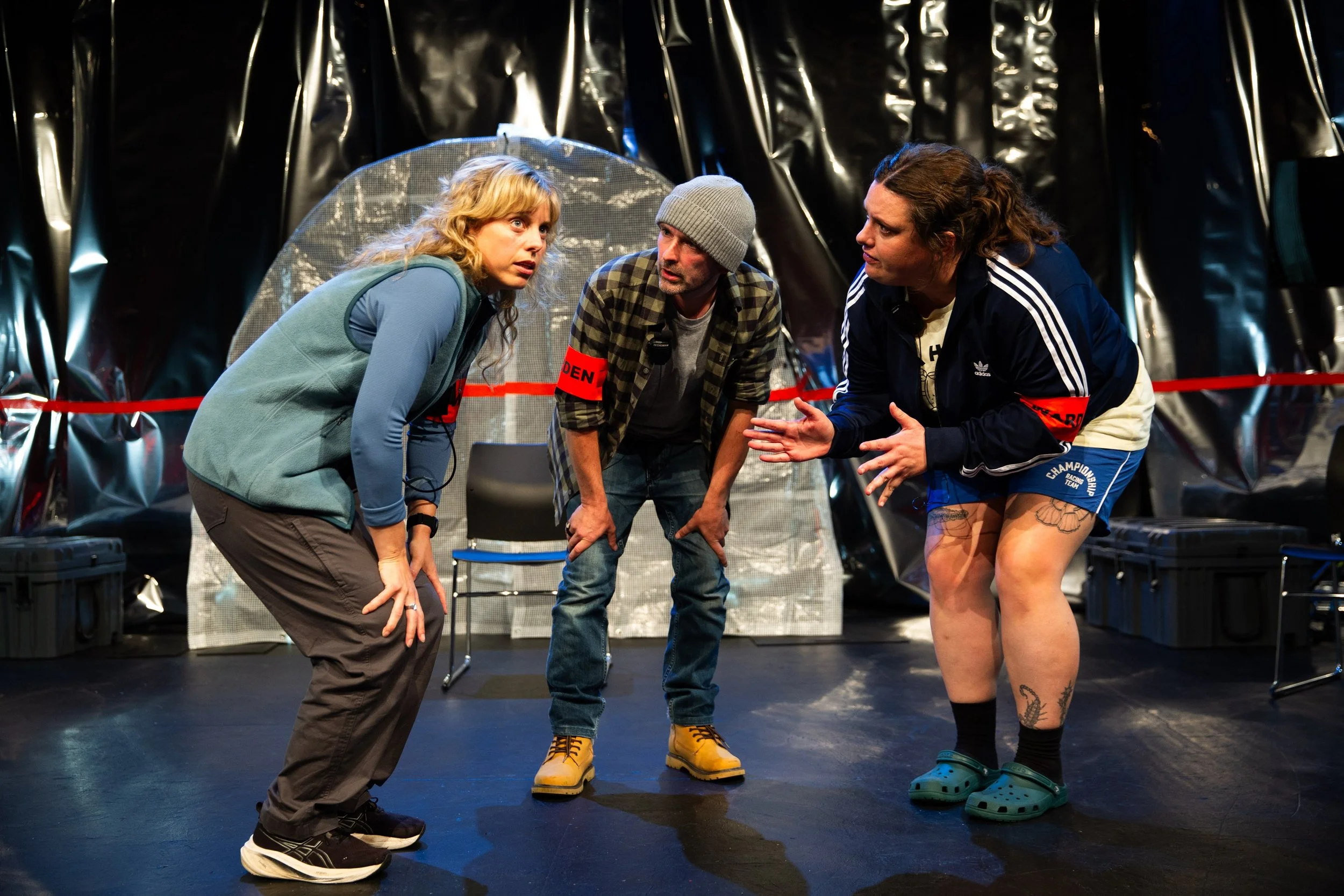
Genuine grip-my-neighbour’s-arm scares are hard enough to pull off. But to do so with humour and authenticity too is a world of skill all on its own. Across the course of 70 minutes - sorry “six nights and seven days” - we are guided through quarantine chaos by the wildly underprepared, best-effort wardenage of Stella Reid, Hannah Kelly, and Joel Baxendale, sharing their names with the characters they play.
Rule-following and zealous, Stella and Hannah are the serious but kind faces guiding us into the space as we familiarise ourselves with the world we’ve stepped into, and the role our instruction card assigns within it. And then Joel arrives, late but with supplies (in the form of onions and Werther’s originals), and the first seed of suspicion is planted.
Images: Lewis Ferris
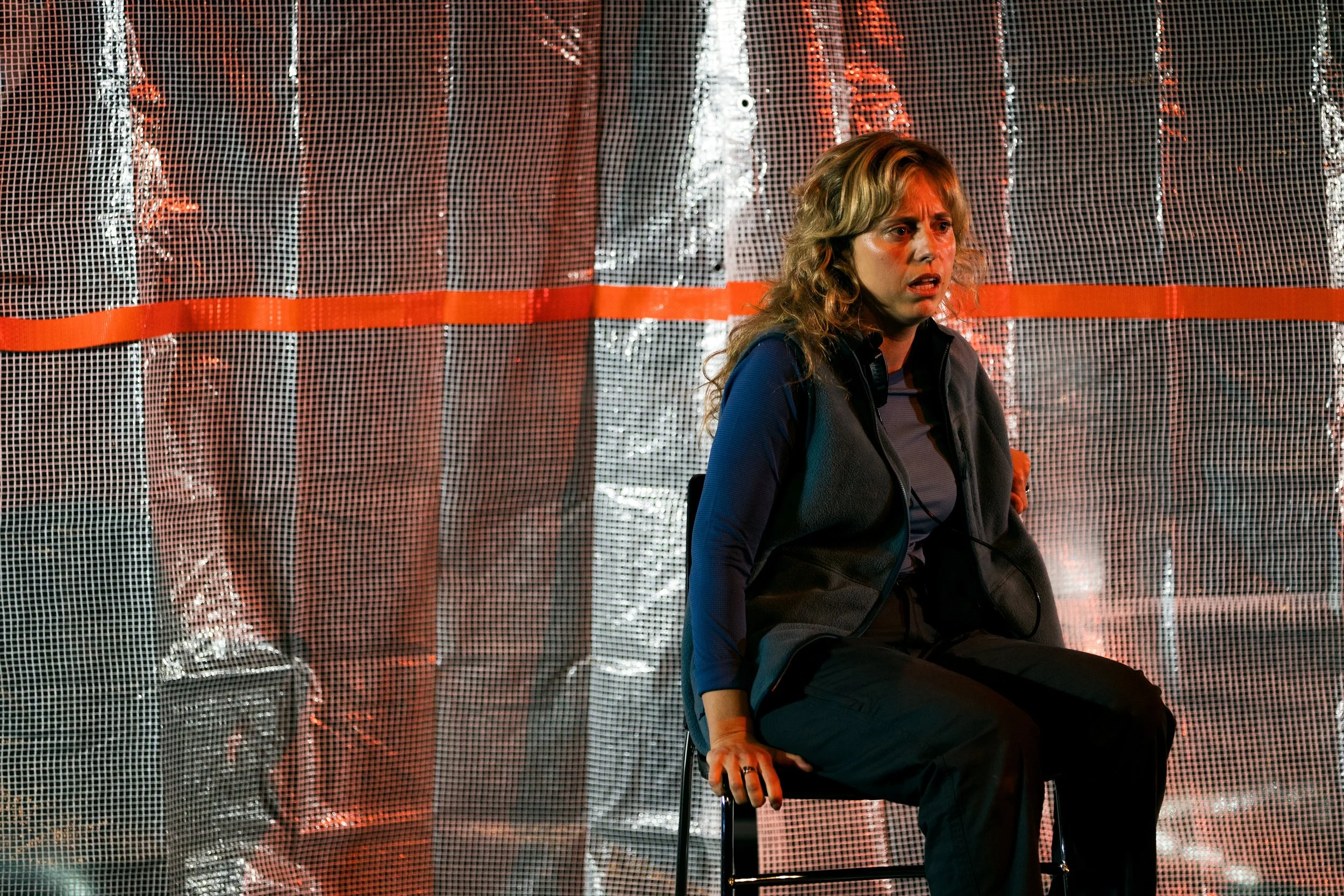
Together, isolates and wardens build routine in a bid to find normalcy within this strange new environment, a system propelled by the simple day-and-night conceit at the heart of the Werewolf game: survive the night, point fingers come daylight. Werewolf’s design leans on the repetition of simple, in-world elements to build this structure, in clever methods both lo-fi and hi-fi: manipulating pace, sharpening narrative clarity, and grounding us with familiarity inside the unfamiliar. Then, as the structure begins to decay - rotting from the inside out - audiences are embroiled in the chaos, invested and active in the world they’re co-creating.
This collapse, too, has its own rhythm. Each incoming sunset brings a fever, a fervour that has you on the edge of your seat as tensions rise, agitations fizzle, and truths slip out in the fading of the light. Then darkness - and with it, genuine uncertainty about what the next sunrise will bring.
It’s a rhythm that could easily wear thin, and there are some moments where the whodunnit beats do repeat themselves. But these are quickly eclipsed by the wit and energy of the actors, and that heart-palpitating anticipatory sense of what comes next that the work keeps stoking. Underpinning it all is a story that rolls out organically, yet within this gamified context, creates the illusion that we as audiences have more control than we actually do.
Images: Lewis Ferris
That illusion is no accident. The piece makes invisible the complex system of language, rules, and devices it’s held together by, arrived at through what must have been a serious amount of trialling and adapting. What results isn’t participatory so much as it is collective, removing the general anxiety, fear, and dread that usually comes with that terrifying ‘p’ word. It's rare to find a theatre experience where people feel comfortable enough - impassioned, even - to voluntarily interact, yelling out suggestions in moments clearly not designed for audience input. And it's this that makes Werewolf so fascinating to sit inside: the longer it runs, the harder it becomes to tell genuine audience instinct apart from instruction-card-prompted participation.
The creators have a term for these moments: "rogue bravery" - a phrase that, to me, captures the wider sense of duality running through the whole work. Day versus night. Bravery that tips into recklessness. Laughing while screaming in fear. Communities that are collective and exclusionary in the same breath. Trust that curdles into suspicion the moment our own safety, or sense of belonging, feels at stake. Possibly the most harrowing of these is the work’s interrogation of a contradiction at the heart of the bunker - and the way this same irony can take hold in spaces like it. When does the act of building community to find safety from an unknown 'other' start to rot from within? At what point does our own fear, and our tendency to self-cannibalise, move the threat from outside the walls to inside them?
Werewolf plays 23-26 September at the Underground Theatre, Brisbane Powerhouse, as part of the 2026 Brisbane Festival.
Images: Lewis Ferris