Scorched Earth | Attic Projects
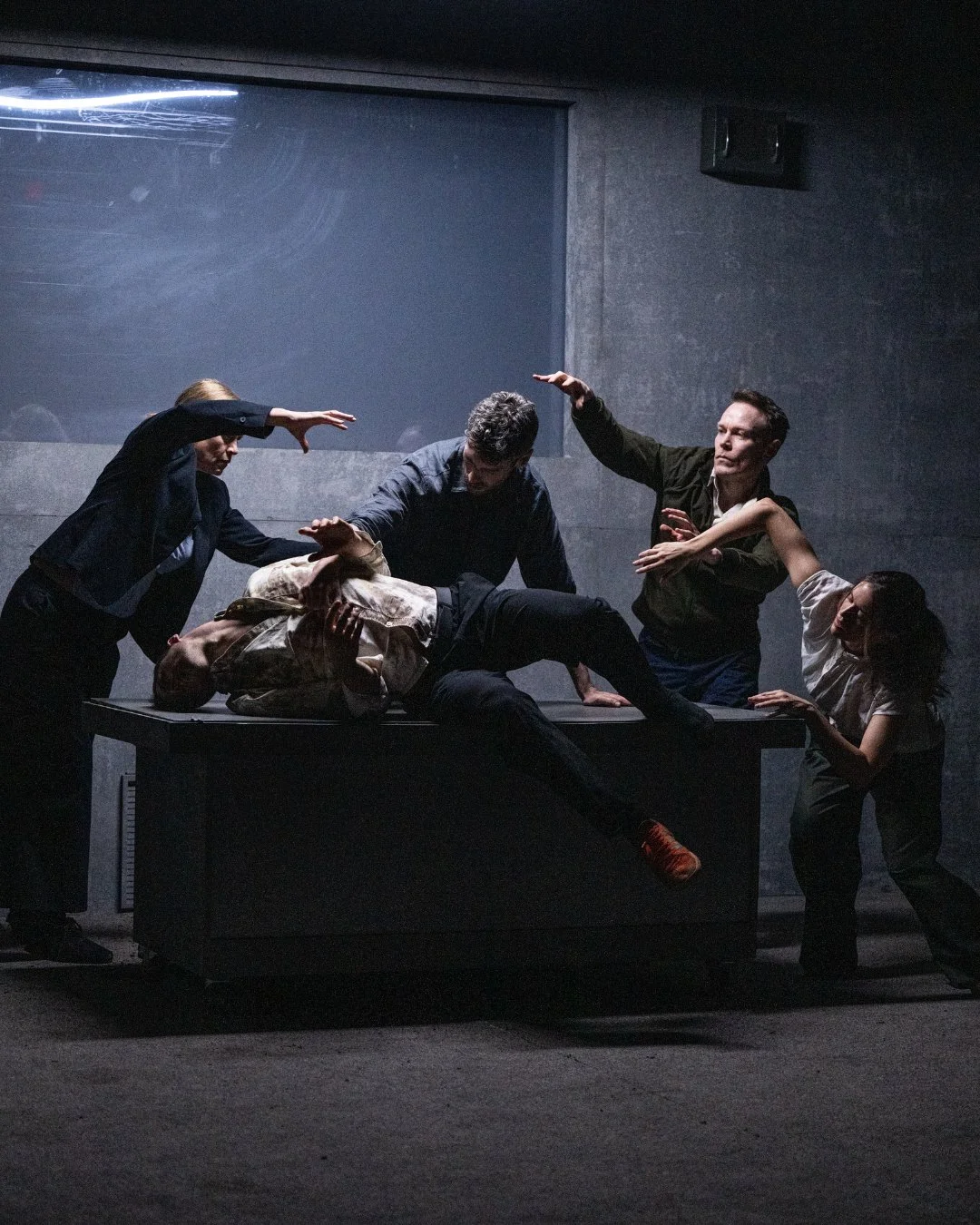
Image: Teddy Wolff
Once a power station in the 1920’s, the Brisbane Powerhouse is now one of the city's premier theatres. It's a space with a history - mixed cultural heritage, mixed class heritage, mixed purposes. I cannot think of a more fitting show to take place here than Scorched Earth, itself born of mixed purpose and sordid history. It’s a show about blurred lines - the line between theatre and dance, the line of guilty and not guilty, the line of belonging and alienation. This thematic and structural focus is paid off all throughout the show's 80 minute runtime, leaving me wondering why more work doesn’t attempt this fusion of mediums.
Scorched Earth follows the criminal investigation of farmer John McKay, who finds himself credibly accused of murder after the body of former resident William Dean is found on a property that McKay had spent years working on, only for Dean to outbid him at auction. It’s a compelling narrative (based on John B Keane’s The Field, which itself was based on a real-life murder), but Scorched Earth is much less concerned with the traditional structure of a conventional crime thriller than it is the emotional trappings of one. While this police procedural element forms the broader skeleton of Scorched Earth, I have to stress that this is not simply a staged version of a Happy Valley or Broadchurch. Instead, Scorched Earth is a passionate, enthralling investigation of feelings of belonging, ownership, and guilt.
To be candid, dance as a medium is one that largely escapes me. I understand the mechanisms of film/theatre/television/music, and as such feel justified in writing about and critiquing them, but dance is something that I don’t even know where to begin in doing, let alone discussing. This is all to say that I found the dance sequences embedded throughout Scorched Earth’s runtime to be incredibly affecting in ways that I had not predicted, and opened my mind to the vastness of the medium. It’s a perfect inclusion in such a heady and emotionally-driven narrative - emotional threads are exacerbated and concluded through thrashing limbs and swaying hips, speaking truths that would feel naff if said in as many words. Similarly, the theatrical elements of Scorched Earth keep it from becoming too conceptual - the narrative grounding and realist sequences keep the show moving without getting lost in the weeds. This pairing works to make Scorched Earth as emotionally compelling as it is tense and engaging, and forms a truly unique identity.
As McKay’s time in police custody continues (his remaining time indicated by a nifty onstage clock which warps during more abstracted moments), all parties become more manic and messy. While early interactions are cordial, if cold, there is a desperation that creeps in as the runtime ticks down. This encroaching dread and stress pairs perfectly with the show's mixed-medium approach, as the breaks into dance become more frequent and frenetic, often straying into genuinely violent sequences of movement that left me unnerved. I was particularly struck by the physical embodiment of the land, performers dressed in pseudo ghillie suits, who would loom shoggoth-like towards and around McKay, before eventually piling on top of him. There are several of these cosmic horror-style moments of abstraction, and it helps to bring the thematic weight of Scorched Earth home, while simultaneously neatly threading the transitions between theatre and dance.
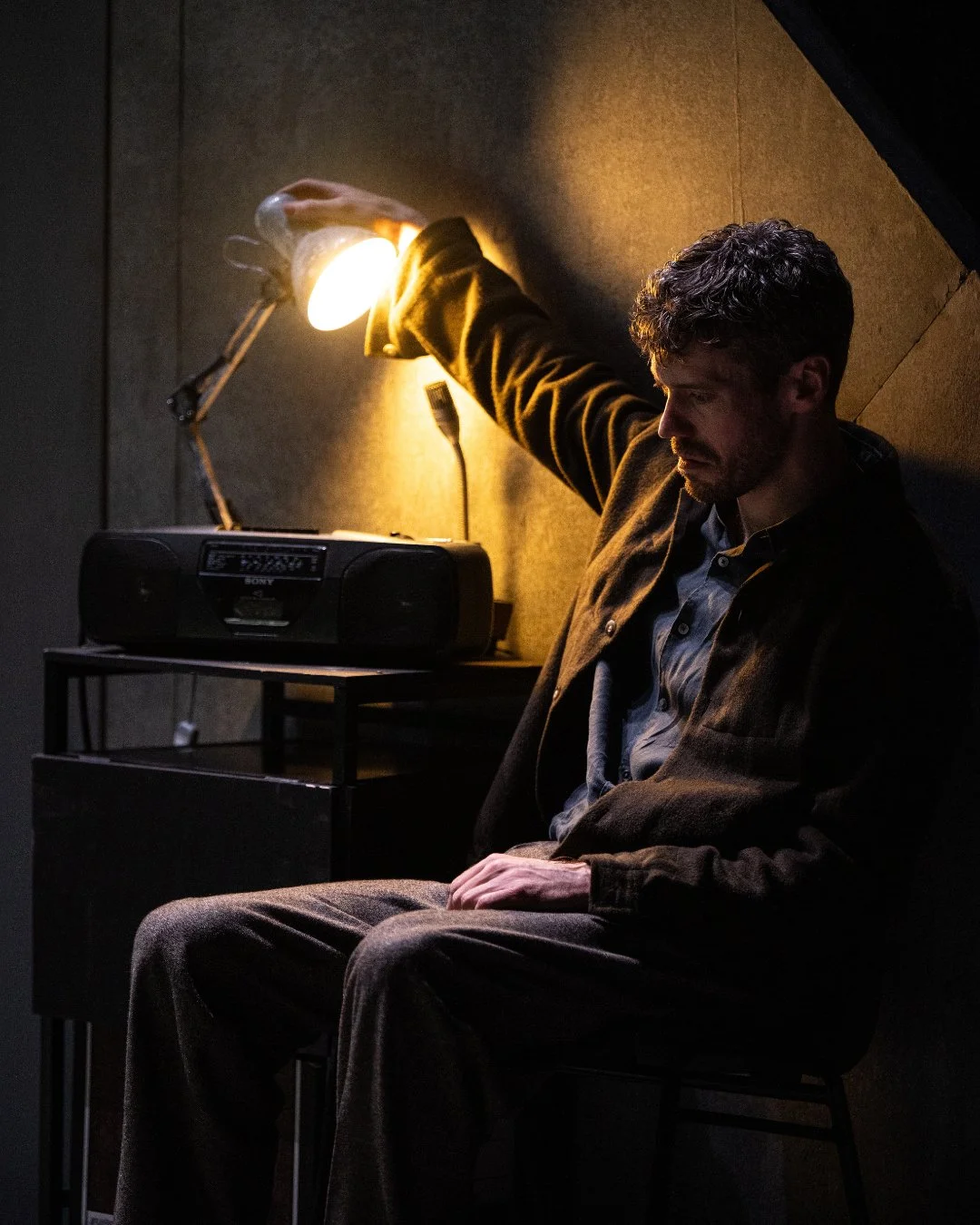
Image: Teddy Wolff
The examination of ‘belonging’ felt particularly fascinating. What does it mean to belong to a place? What does it mean for a place to belong to you? Can you deny that which is rightfully yours, whether it be a land deed or a guilty verdict? All of these questions are explored without answer, but I didn’t leave feeling ripped off - it’s a difficult line to navigate, but one Scorched Earth pulls off. I was particularly struck by a B plot concerning a lost donkey (who also shows up onstage in several Donnie Darko-esque moments) - a line about how they bray as an expression of pain felt, to me, like a key to unlock a deeper understanding of the show. Each line spoken by McKay feels like a dig deeper into the hole he has created for himself, but his internal anguish surrounding the affair he has become entrenched in demands that he speak. It is fitting, then, that the show ends with him alone onstage, silent.
The set is absolutely stunning - a modular construction that shifts effortlessly from interrogation room to bar, radio show, auction house and more. While modular stages tend to give me pause, Scorched Earth uses it to its fullest extent throughout the show - performers sneak in through wall vents, remove mirrors from walls, and dig graves from cabinetry, all in ways that never break the incredibly tense and gritty energy sustained throughout Scorched Earth. It’s a thing of beauty as-is, but it’s what it becomes in the final act that had me convinced it may be the best set work I’ve seen on a Magandjin stage.
As the narrative draws to its conclusion, the set is quite literally packed away - performers break down walls, wheel away tables, and carry chairs. As they do this, audiences may peek ever so slightly closer at what looks to be grass in the background through jigsaw-like gaps in the scenery. Once the set is fully gone, light begins to slowly wash onstage to reveal the grassy slope at the centre of the narrative, impossibly large and confusingly shaped. It read to me like something non-Euclidean, tying into the cosmic horror elements sprinkled throughout the show. As the performers attempt fruitlessly to mount the hill to safety, they are slowly but surely unsuccessful - all but our central culprit, left exhausted and alone. It’s a testament to the thematic and narrative power of good set design, and really worked to pay off the modular set, even beyond the levels to which it had already proven its use.
Similarly, I cannot stress enough the degree to which the tech crew of Scorched Earth contribute to its overall quality. Projection, lighting, and audio are all executed phenomenally throughout the runtime, and were crucial to the show landing how it did. One iffy lighting cue could have killed the experience, but no such cue could be found. It’s a show that utilises each and every resource at its disposal, and makes me glad that it was able to take stage at a venue with such scale and resources as the Powerhouse.
Scorched Earth is a phenomenal testament to the respective powers of theatre and dance, and needs to be seen to be believed. Equal parts dreamlike and nightmarish, it’s more of an experience than a conventional narrative act, and I hope to see more works like it on local stages in the next few years.
Scorched Earth plays 17-20 September at the Brisbane Powerhouse as part of the 2026 Brisbane Festival.
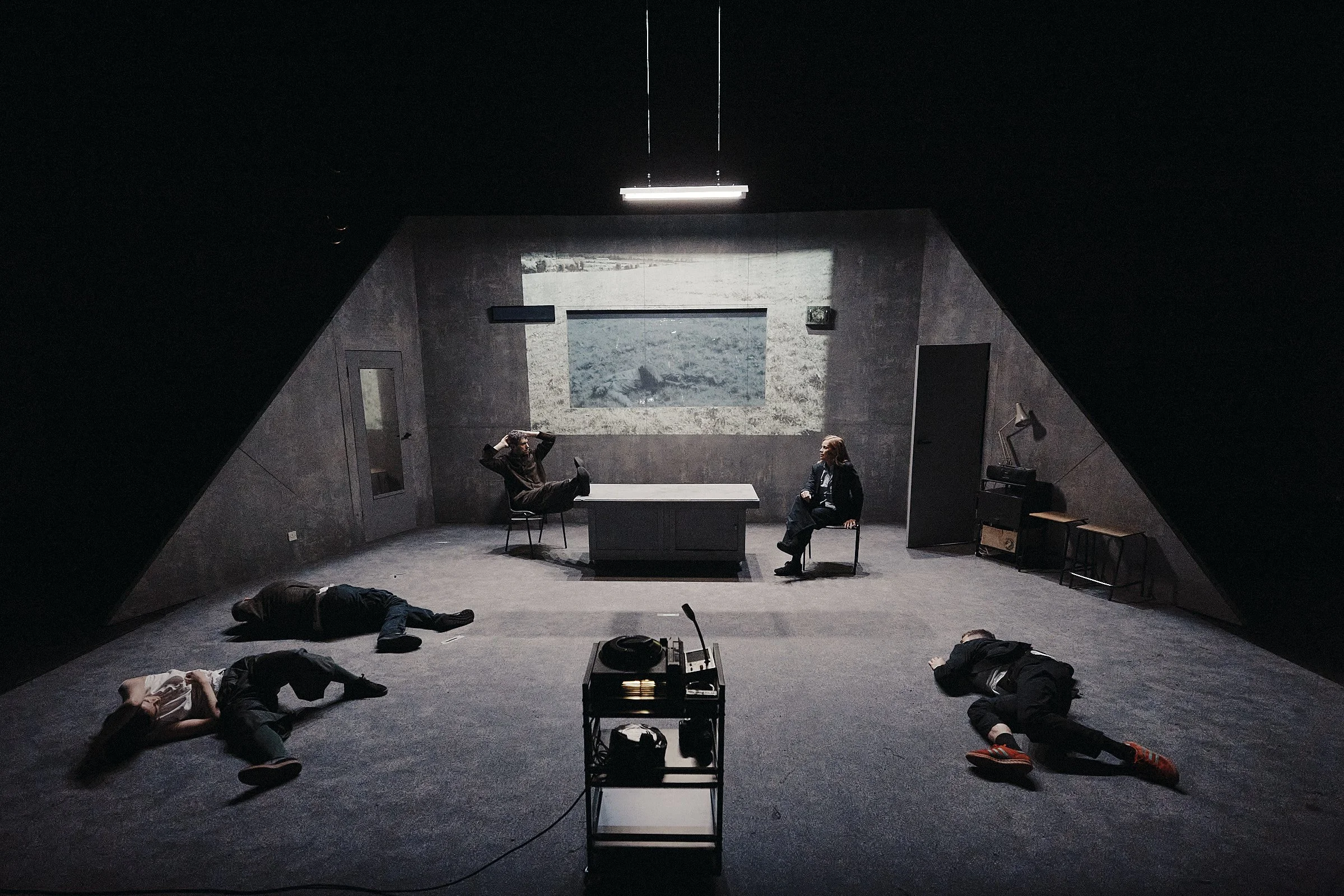
Image: Pato Cassinoni